



Pilot ladders are designed to meet strict safety standards and are typically constructed from strong materials like wood or steel. Pilot ladder is usually equipped with steps that are wide enough for the pilot to securely climb, and ropes are often used to tie it to the vessel, ensuring stability.
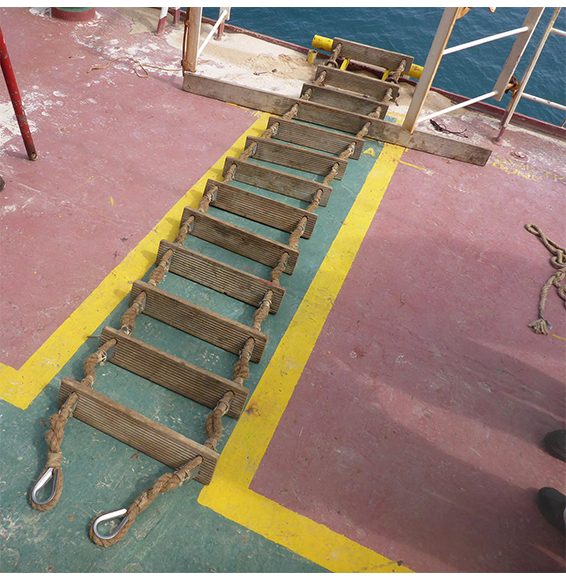
Pilot ladder needs to be long enough to reach from the ship’s deck to the waterline or slightly below. The length is determined based on the ship’s draft, and the ladder must always be long enough to allow safe boarding.
Features of Pilot ladder
Piloy Ladder must be strong enough to support the pilot’s weight, even in rough sea conditions. The steps should be made of a material or design that minimizes the risk of slipping. The ladder should be long enough to reach from the ship’s deck down to the waterline. The ladder should be properly secured to the ship to ensure it remains stable and upright during use.
Pilot Ladder Rope are made from high-strength materials like manila, nylon, or polypropylene for durability and reliable. Steps are made from wood, rubber, or metal, with rubber-coated or non-slip surfaces to prevent slipping in wet conditions.
Pilot Ladder must be strong enough to support the weight of the pilot and withstand environmental factors like high seas or wind. A typical pilot ladder can hold weights up to 150-200 kg or more, depending on its design.
Pilot Ladder should be securely rigged with ropes or stays attached to the vessel’s structure, ensuring stability during boarding or disembarking. Pilot ladder’s rigging should include hooks and shackles that are designed for secure attachment to the vessel, preventing accidental detachments. Pilot ladder should be rigged at an angle that is safe for climbing, typically around 60-70 degrees.


