



NSR-GMDSS
NSR-GMDSS stands for Northern Sea Route - Global Maritime Distress and Safety System. It refers to the implementation of the GMDSS along the Northern Sea Route (NSR). Ships navigating the NSR must comply with IMO's GMDSS requirements for their designated sea areas.
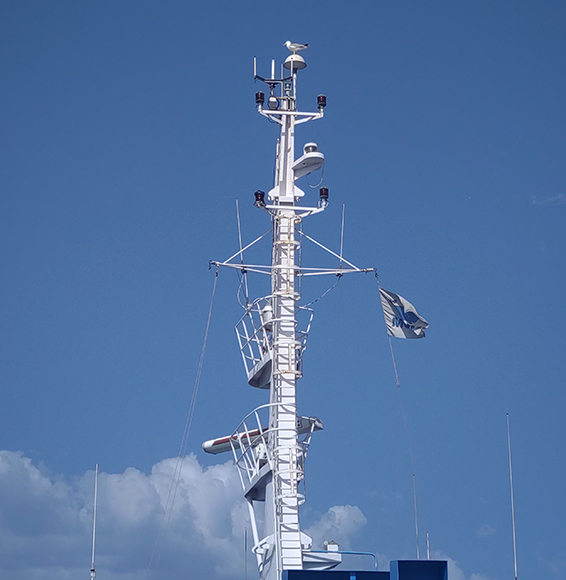
Features for Antennas and Transmitters
1-Antennas and Transmitters
play a crucial role in marine operations by enabling reliable communication, navigation, and data transmission over long distances. Marine antennas are designed to withstand harsh maritime conditions. Transmitters are responsible for sending signals from the vessel to other ships, shore stations, or satellites. Different types of Marine Antennas and Marine Transmitters.
High Power Output and Efficiency
Transmitters with High Power Output: Ensures long-range communication and greater coverage, especially in remote or open water environments.
Efficient Energy Use: For minimizing energy consumption while maintaining reliable signal strength.
Wide Frequency Range
VHF (Very High Frequency): Common for marine communication systems for radio communication and distress signals.
UHF (Ultra High Frequency): Used for high-frequency communications, radar, and sonar systems.
HF (High Frequency): Ideal for long-range communication.
Dual-Band or Multi-Band Capability: Some antennas support multiple frequency bands to cater to various communication systems.
Automatic Tuning and Frequency Management
Automatic Antenna Tuning: Helps ensure optimal performance by adjusting the antenna’s frequency settings automatically for different communication needs.
Frequency Hopping: Helps avoid interference by switching between frequencies during transmission.
Compact Design
Space Efficiency: Marine vessels often have limited space, so compact and low-profile antennas and transmitters are preferred.
Foldable or Retractable Antennas: These designs are beneficial for reducing drag or for storage when not in use.
Durability and Corrosion Resistance
Saltwater Resistance: Antennas and transmitters need to withstand the harsh marine environment, particularly the corrosive effects of saltwater.
UV Protection: Antennas should be resistant to UV radiation, as they are exposed to direct sunlight for extended periods.
Rugged Construction: High-quality materials (such as stainless steel, fiberglass, and specialized coatings) help in protecting against wear and tear.
Integration with Navigation and Communication Systems-
GPS and AIS Integration: Antennas are often integrated with GPS receivers or Automatic Identification Systems (AIS) for tracking vessels and maritime navigation.
Global Maritime Distress Safety System (GMDSS): Communication equipment, including antennas, should support GMDSS standards to ensure safety in emergency situations.
Weatherproof and IP Ratings
Integration with Navigation and Communication Systems—Ease of Installation and Maintenance—Low Interference and Noise Reduction—Marine Radio and Telecommunication systems are essential for navigation, safety, and communication between vessels and shore stations. Marine Radio System include VHF, HF,MF,DSE. Telecommunications include Inmarsat, Iridium, VSAT, NAVTEX, AIS etc.


