



Green Ports Emergency Position Indicating Radio Beacon EPIRB is a distress beacon used in maritime emergencies. EPIRB transmits a distress signal via satellite to alert search and rescue authorities of a vessel in trouble, providing the vessel’s location.
Global Coverage (406 MHz) The main frequency used for distress signalling worldwide, ensuring that the signal is detected by satellites (such as those from the COSPAS-SARSAT system) for global coverage. 406 MHz signals are used to uniquely identify the vessel or individual in distress.
Homeland Security and Local Coverage (121.5 MHz) Older analogue distress signal, often used by search and rescue teams for local triangulation once they detect the 406 MHz signal.
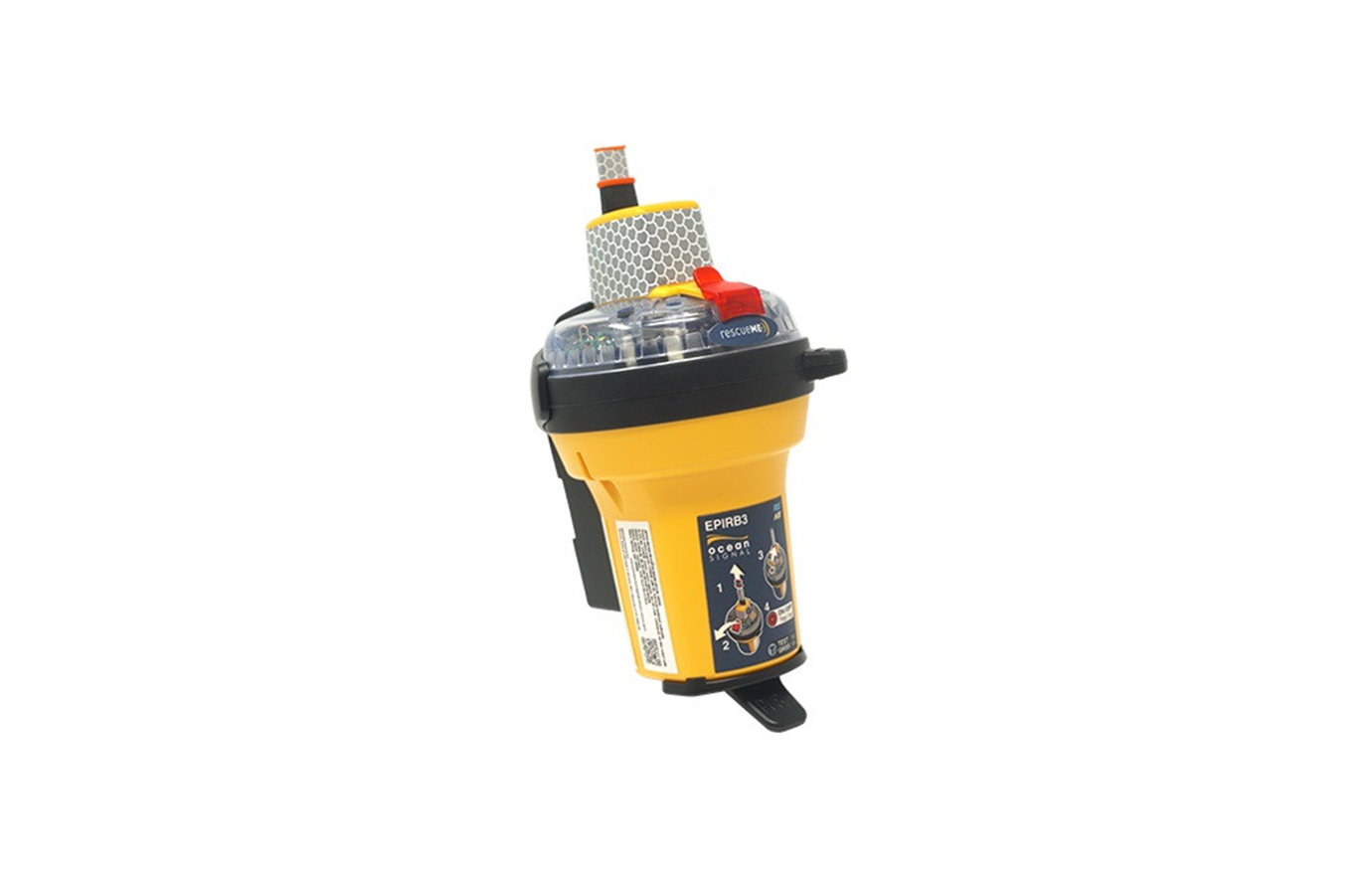
Features of EPIRBs
GPS Integration Some modern EPIRBs are equipped with GPS to provide the exact position of the distressed party to search and rescue teams. This feature dramatically reduces the time taken to locate the emergency.
EPIRBs feature a water-activated switch, meaning the device automatically turns on when immersed in water, making it easier to deploy in emergencies. The EPIRB can also be manually activated in non-water-related emergencies.
EPIRBs are designed to operate for a prolonged period (typically 48-96 hours) after activation, allowing for rescue teams to locate the signal even in extended emergencies. Batteries are typically replaceable and should be checked regularly for reliability and expiration.
EPIRBs are built to withstand harsh environments, including exposure to saltwater, extreme temperatures, and rough conditions, ensuring reliability even in challenging maritime environments. EPIRBs are generally compact enough to be mounted on a vessel or carried on board without taking up excessive space.
EPIRBs are equipped with an integrated Strobe Light to make the device visible in low visibility conditions, such as during the night or in poor weather.
EPIRBs must meet specific international standards for performance and reliability. EPIRBs are required on certain vessels to comply with SOLAS (Safety of Life at Sea) regulation those set by the International Maritime Organization (IMO) and the International Telecommunication Union.
EPIRBs are designed to float on the water’s surface for easy retrieval and signal transmission. Some EPIRBs designed to be mounted on a vessel or aircraft, ensuring they are easily accessible in emergency.
EPIRBs are often pre-registered with important details like the vessel’s name, owner contact information, and other relevant data that helps rescuers to identify the situation faster. EPIRBs are designed to withstand impact from rough handling or being dropped, ensuring they continue to function in emergency conditions,
These features together make EPIRBs critical in saving lives by ensuring quick detection and rescue operations in maritime and remote emergencies.


