



Marine Circuit Breakers for Marine are crucial components for ensuring safety and protection against electrical faults in marine environments. Circuit Breakers are designed to prevent overcurrent conditions. Ensure the Circuit Breaker fits the space available and meets the necessary marine standards.
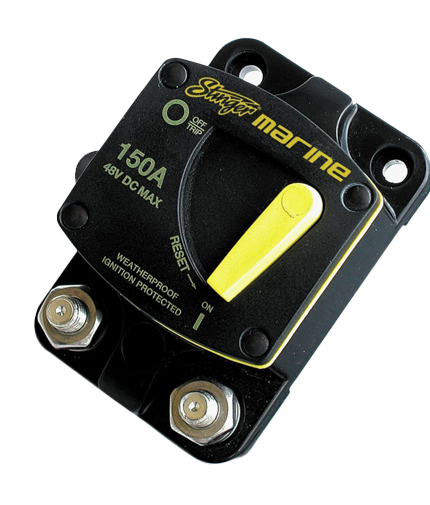
Features of Circuit Breakers
Overload and Short Circuit Protection
Marine circuit breakers are designed to prevent fires and equipment damage by interrupting the current flow in the event of an overload or short circuit. This is crucial for protecting sensitive electrical systems aboard vessels.
High Current Interrupting Capacity
These circuit breakers are designed to handle high fault currents that can occur in a marine electrical system. They need a high interrupting capacity to safely break the circuit without causing further damage or sparking.
Increased Safety Features-
Circuit breakers for marine use may incorporate additional safety features like arc fault protection, residual current devices and earth leakage detection to ensure crew safety and prevent electrical accidents.
Compact and Space-Saving Design
Space is often limited on ships and offshore platforms, so marine circuit breakers are designed to be compact, helping to maximize space while maintaining functionality.
Manual and Automatic Reset Options
Some marine circuit breakers have both manual and automatic reset options, allowing crew members to easily restore power after a trip or fault condition, while others might require a manual reset.
Thermal and Magnetic Protection
Marine circuit breakers are designed to provide both thermal and magnetic protection to prevent damage from overloads and short circuits. Thermal protection responds to long-term overloads, while magnetic protection responds to short circuits by tripping the breaker instantly.
Corrosion Resistance
Marine environments expose electrical equipment to moisture, saltwater, and humidity. Marine circuit breakers are designed with corrosion-resistant materials such as stainless steel or coatings to protect against saltwater corrosion and increase their lifespan.
Vibration and Shock Resistance
The marine environment often involves significant vibrations and shocks due to engine operation, heavy machinery, and rough sea conditions. Marine circuit breakers are built to be vibration-resistant to ensure stable and reliable operation.
Waterproof and IP Rating
Marine circuit breakers typically have a high Ingress Protection (IP) rating to ensure they can operate safely in wet or damp conditions. These ratings might include IP56, IP67, or higher, indicating that the breaker is dust-tight and can withstand exposure to water jets or temporary immersion.
Remote Trip and Monitoring
Some advanced marine circuit breakers are equipped with features that allow for remote tripping or monitoring, providing additional flexibility in managing power systems on board.
Customizable Tripping Curves
Some marine circuit breakers allow for customizable tripping curves, which can be adjusted to suit specific needs of the electrical circuits, ensuring that they are optimally protected based on the load characteristics.
Interruption and Isolation Features
In cases of emergency, marine circuit breakers often have the capability to isolate a section of the electrical network for safety purposes, preventing further damage or hazards.
Durability and Longevity
These circuit breakers are built for long-lasting durability to handle the wear and tear of daily operation on a ship. They are engineered to function reliably for years without failure.
These features are critical for ensuring safe and efficient electrical operations aboard vessels and platforms in harsh marine conditions.


