



Hydrochloric Acid
HCl solutions are used in various applications in marine environments, Hydrochloric Acid must be handled with caution due to their corrosive nature. Hydrochloric acid is often used to clean and descale marine equipment.
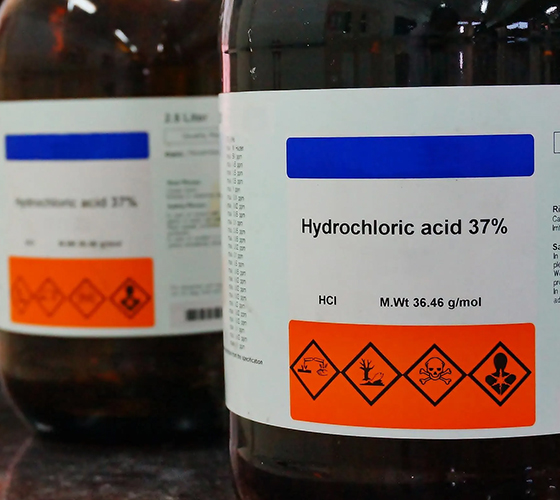
Features of Marine HCl
pH Influence
HCl is a strong acid that can affect the pH of seawater. Increases in HCl concentration can lower the pH of seawater, contributing to ocean acidification. This is a concern due to increased CO₂ levels in the atmosphere, which dissolve into the oceans and react to form carbonic acid.
Biological Relevance
Some marine organisms, such as certain species of fish and invertebrates, can produce hydrochloric acid in their digestive systems for breaking down food (e.g., in stomachs) or for other metabolic processes. While not in large amounts in the ocean, HCl is a component of digestive fluids.
Presence in Seawater
Hydrochloric acid is naturally present in seawater, but in low concentrations. It can be a result of various biological and chemical processes.
Corrosive Properties
Like any strong acid, HCl can be highly corrosive. In the marine environment, this property may contribute to the dissolution of minerals and other materials, particularly in volcanic areas or hydrothermal vent ecosystems where chemical reactions release HCl into the ocean.
pH Influence
Corrosive Properties-Like any strong acid, HCl can be highly corrosive. In the marine environment, this property may contribute to the dissolution of minerals and other materials, particularly in volcanic areas or hydrothermal vent ecosystems where chemical reactions release HCl into the ocean.
Biological Relevance
Ocean Acidification-While marine HCl itself is not the main driver, ocean acidification involves increased CO₂ in seawater, which leads to a drop in pH. Some of the processes related to ocean acidification may involve the production of acids like hydrochloric acid, which can contribute to reduced availability of calcium carbonate, affecting marine life.
Chemical Reactions
Geological Sources- Hydrochloric acid can be released into the ocean via volcanic eruptions or underwater hydrothermal vents, where sulphur compounds react with water to produce acids, including HCl.
HCl
HCl is not abundant in marine environments, its role in the chemistry of seawater and its biological significance in marine ecosystems is crucial.


