



Boat horns operate
Boat Horns operate through a combination of compressed air and vibrating mechanisms. Boat Horns create sound waves that can be heard over long distances, essential for navigation safety. Boat Horns can be pneumatic, electric, or mechanical, each using different principles.
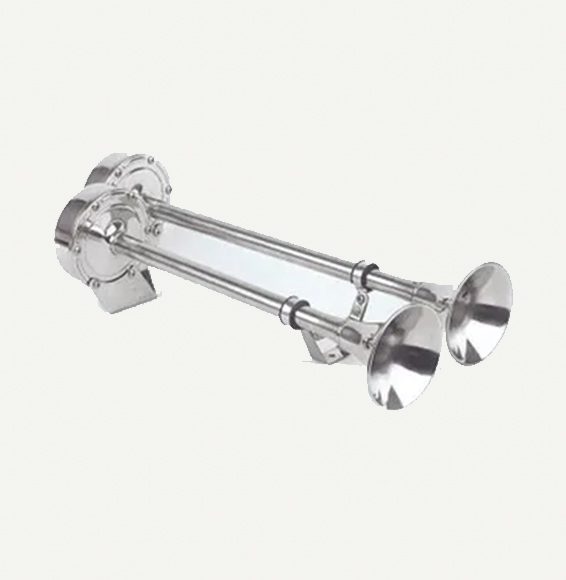
Features and Functions of Boat Horns
Sound Power
Boat horns are designed to emit a loud, powerful sound to ensure they can be heard over long distances and through various environmental conditions, such as wind or engine noise. The sound levels usually range from 110 to 120 decibels.
Compliance with Regulations
Most countries have regulations specifying the type of sound signals that boats must use. For example, in the U.S., the Coast Guard mandates that vessels use sound signals in specific situations, such as when navigating in limited visibility, overtaking another vessel, or avoiding collisions.
Push Button or Electronic Activation:
Most boat horns are activated either via a simple push button or an electronic switch. The system might include a built-in timer or sensor for automatic activation in certain situations, such as fog.
Marine-Grade Durability:
Since boat horns are exposed to harsh marine environments, they are made from corrosion-resistant materials like stainless steel or durable plastics. They are also often waterproof to withstand rain, saltwater, and UV exposure.
Marine-Grade Durability:
Since boat horns are exposed to harsh marine environments, they are made from corrosion-resistant materials like stainless steel or durable plastics. They are also often waterproof to withstand rain, saltwater, and UV exposure.
Integrated Safety Features:
Some boats have horns integrated with their navigation lights or automatic collision avoidance systems to ensure that signalling is used properly in different conditions.


