



Electromagnetic Speed Logs also known as Doppler speed logs, are marine navigation devices. Electromagnetic Speed Logs measure the speed of a vessel relative to the seabed or water mass, using the principles of Doppler radar. Electromagnetic Speed Logs typically use sonar or radar signals to send waves to the water surface or bottom and then measure the return signal's frequency shift caused by the vessel’s movement.
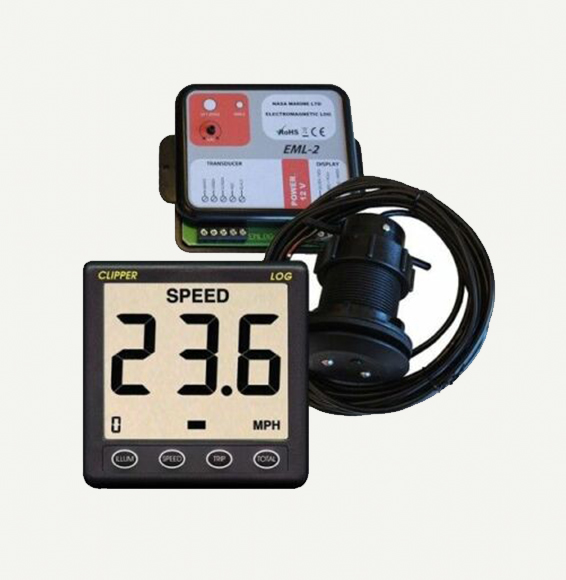
Features of Electromagnetic Speed Logs
Electromagnetic Technology
These speed logs use the principle of electromagnetic induction to measure the velocity of water. They generate an electromagnetic field and measure the change in this field caused by the movement of water over the sensor.
Accurate Measurement
Electromagnetic speed logs are highly accurate, providing real-time data on the vessel’s speed through the water. They typically offer precise speed measurements, even at low velocities.
No Moving Parts
Unlike mechanical speed logs, electromagnetic logs have no moving parts, which reduces wear and tear and improves durability and maintenance intervals.
Reliability
These devices are generally reliable in various environmental conditions, including high-speed operations, rough seas, or turbulent waters. They are less affected by fouling (growth of marine organisms) or debris compared to mechanical logs
Real-time Data
The system provides continuous real-time data, which can be integrated into the vessel’s navigation system, ensuring accurate and up-to-date speed information for the crew.
Ease of Installation
Electromagnetic speed logs are often easier to install compared to traditional mechanical logs, as they don’t require the through-hull mechanical systems or moving parts.
Minimal Calibration:
They typically require less calibration than mechanical systems, which often need to be adjusted for the shape of the hull and other physical factors.
Low Maintenance:
Due to the lack of moving parts and the use of electromagnetic sensors, electromagnetic speed logs generally require less maintenance over their lifespan.
Integrated with Other Systems:
They can be integrated into the ship’s overall navigation system, providing data that can be used for logging, route optimization, and performance analysis.
Depth and Temperature Compensation:
Many electromagnetic speed logs are capable of compensating for changes in water depth and temperature, which can influence the speed reading.
Measurement Units:
These logs often display speed in units like knots, meters per second, or kilometres per hour, depending on the user’s preferences or the system setup.
Compact Design:
They are typically compact and suitable for vessels with limited space for installation.
Electromagnetic speed logs are widely used in commercial and military vessels due to their durability, reliability, and precision, making them an essential tool for accurate navigation and speed measurement.


