



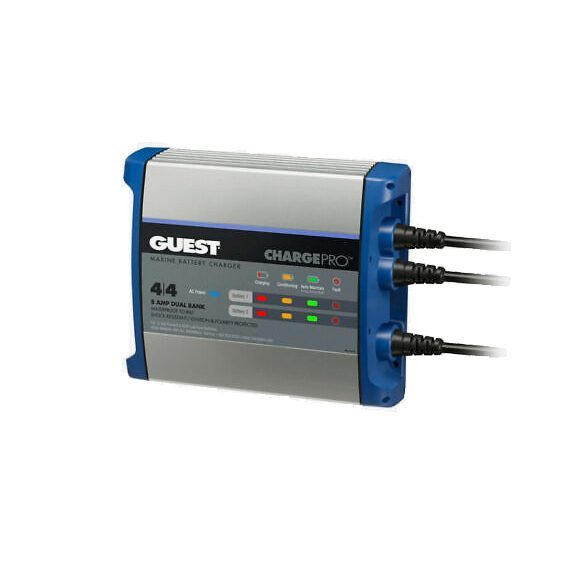
Marine battery charges it's important to choose one that is designed to withstand the harsh conditions of the marine environment. Marine Battery charger depends on your boat’s needs, the type of batteries, and how often you use the boat. Marine Battery chargers often come with high amps for faster charging.
Voltage Regulation
Proper voltage regulation ensures that the charger doesn’t overcharge or undercharge the battery. Marine chargers typically offer either 12V or 24V systems, with some supporting both.
Multiple Battery Bank Charging
Many marine vessels have multiple battery banks. A good marine charger can handle multiple battery banks and provide independent charging for each.
Multi-Stage Charging
Fast charging to restore battery power, Slow down charging as the battery nears full capacity, Maintains the battery at full charge without overcharging, A periodic high-voltage charge to balance the battery cells.
Remote Monitoring & Control
Some advanced chargers offer remote monitoring or control via Bluetooth, Wi-Fi, or dedicated apps. This allows you to track the charging process, check battery health, and make adjustments from a distance.
Features for Battery Chargers
Temperature Monitoring and Compensation
Temperature can affect charging efficiency and safety. Some chargers include built-in temperature sensors that adjust the charging process based on ambient temperature, preventing overheating or undercharging in extreme conditions.
Energy Efficiency
Energy-efficient chargers reduce power consumption, which is important in a marine environment where energy resources may be limited.
Easy Installation
Marine battery chargers are typically designed for easy installation, with user-friendly interfaces, clear labelling, and appropriate mounting options.
Built-In Safety Features
Chargers for marine use are equipped with various safety features, including short-circuit protection, over-voltage protection, over-temperature protection, and current limiting to prevent damage to the system and ensure safe charging.
Waterproof and Corrosion-Resistant-
Marine environments expose battery chargers to harsh conditions, including water, humidity, and salt. A waterproof and corrosion-resistant design ensures longevity and safe operation.
Compatibility with Different Battery Types
Different boats may use different types of batteries. Marine battery chargers often have settings for various battery chemistries to ensure safe and effective charging.
Automatic Charging & Maintenance
Modern chargers often come with automatic features, including an automatic switch from bulk to float mode and maintenance charging, which helps extend the lifespan of the battery by ensuring it’s always topped up without the risk of overcharging.


